

In this article
- Why the twin prime conjecture continues to fascinate mathematicians
- Why prime numbers are the building blocks of math
- When two prime numbers appear side by side
- The simple question nobody has answered
- Major breakthroughs in the twin prime conjecture
- Why proving the conjecture is so difficult
- Why the twin prime conjecture stands out among math conjectures
- A simple question that still challenges the world's best mathematicians
Why the twin prime conjecture continues to fascinate mathematicians
Imagine spending centuries trying to answer a question that a middle school student can understand in less than a minute. That is the story of the twin prime conjecture. It asks a deceptively simple question:
Are there infinitely many pairs of prime numbers separated by just two?
Despite more than two centuries of research and remarkable breakthroughs, no one has found the answer. That combination of simplicity and mystery has made the twin prime conjecture one of the most fascinating math conjectures ever proposed.
The twin prime conjecture is often linked to French mathematician Alphonse de Polignac, who proposed a broader conjecture in 1849. He suggested that every positive even number, such as 2, 4 or 6, appears infinitely many times as the difference between two consecutive prime numbers. The twin prime conjecture is simply the special case where that difference is two.
To understand the conjecture, we first need to explore what prime numbers are, why they have fascinated mathematicians for thousands of years, and how twin primes fit into one of the biggest mysteries in math.

Why prime numbers are the building blocks of math
Prime numbers are positive integers greater than 1 that are divisible only by 1 and themselves. Every whole number can be uniquely expressed as a product of prime numbers, making them the foundation of arithmetic.
Some familiar examples include:
- 2, the only even prime number.
- 3, 5, 7, 11 and 13.
- Larger primes such as 17, 19, 23 and 29.
The study of prime numbers dates back to Ancient Greece. Around 300 BCE, Euclid proved that there are infinitely many prime numbers, a discovery that laid the foundations of modern number theory. Since then, prime numbers have become one of the most important topics in math and continue to inspire new discoveries.

When two prime numbers appear side by side
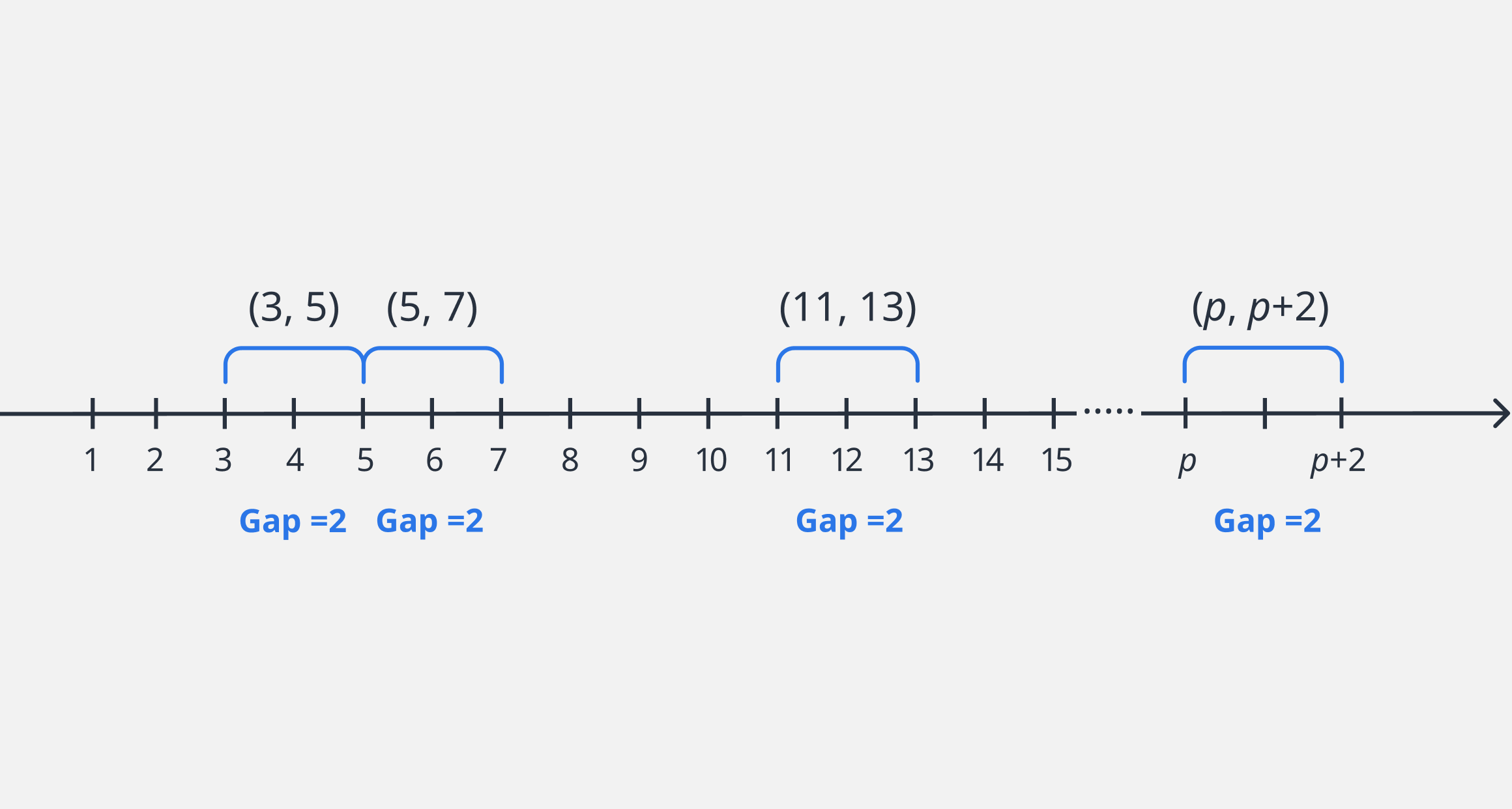
A pair of twin primes consists of two prime numbers separated by exactly two units. Some well-known examples are (3, 5), (5, 7), (11, 13) and (17, 19).
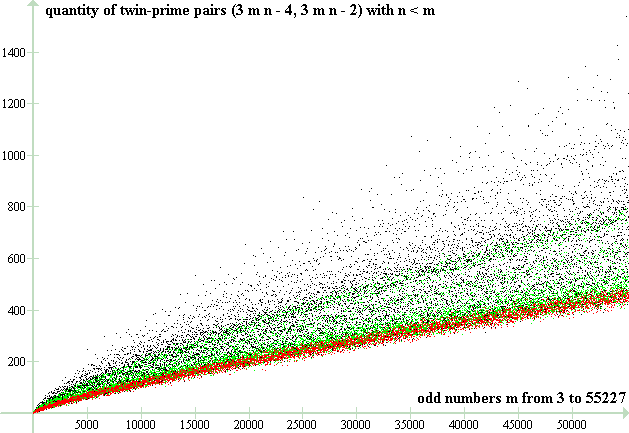
At first glance, these pairs may seem to appear randomly. However, mathematicians noticed that twin primes continue to occur even as numbers become much larger. Although they become less frequent, they never seem to disappear completely.
This naturally raises a fascinating question: do twin prime pairs continue forever?
The simple question nobody has answered
The twin prime conjecture states that there are infinitely many twin prime pairs.
It is one of those rare problems that almost anyone can understand after a short explanation, yet no one has ever found a complete proof. This combination of simplicity and depth has made The twin prime conjecture one of the best-known math conjectures.
For more than two centuries, the conjecture has inspired researchers to develop new ideas and techniques for studying how prime numbers are distributed.
Major breakthroughs in the twin prime conjecture
Although the conjecture remains unsolved, several discoveries have transformed our understanding of prime numbers.
One of the first major breakthroughs came in 1919, when Norwegian mathematician Viggo Brun developed new techniques for studying prime numbers. He discovered that twin primes become increasingly rare as numbers grow larger.
One of the reasons Brun’s result was so important is that it contrasted with what mathematicians already knew about prime numbers. If you add the reciprocals of all prime numbers, such as:
the total keeps growing forever, even though each new fraction becomes smaller (in math called a divergent sum). However, Brun proved that if you perform the same calculation using only twin primes, the total approaches a fixed value instead (convergent sum).
This does not mean that there are only finitely many twin primes. Rather, it shows that if twin primes continue forever, they become rare enough for their reciprocal sum to remain finite. This surprising result, now known as Brun’s Theorem, was the first major clue that twin primes behave differently from prime numbers in general.
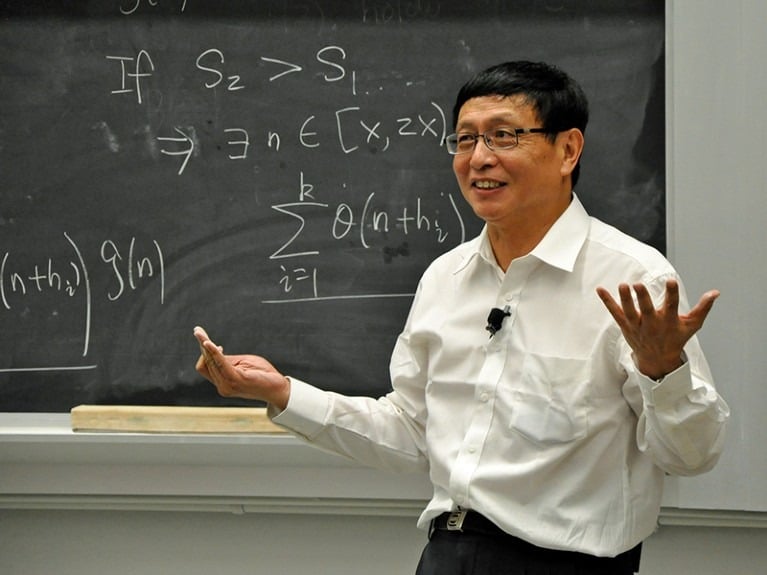
Another milestone came in 2013, when Yitang Zhang proved that there are infinitely many pairs of prime numbers whose difference is less than 70 million. This may seem far from the gap of two required for twin primes, but it was a revolutionary result. Before Zhang’s work, mathematicians could not even prove that prime numbers would continue appearing infinitely often within any fixed distance of one another. His discovery opened the door to a new wave of research, bringing mathematicians closer than ever to proving The twin prime conjecture.
Inspired by Zhang’s work, the collaborative Polymath Project dramatically reduced this upper bound. While mathematicians have not yet reached a gap of two, these advances represent some of the most significant progress ever made toward proving The twin prime conjecture.
Why proving the conjecture is so difficult
Prime numbers often appear random, even though they follow deep underlying patterns.
Researchers have developed increasingly sophisticated tools to study how primes are distributed, but these methods still cannot determine whether infinitely many twin prime pairs exist. Finding a proof may require entirely new ideas that have not yet been discovered.
This balance between a simple question and an extraordinarily difficult answer is one reason why The twin prime conjecture continues to fascinate both professional mathematicians and students.
Why the twin prime conjecture stands out among math conjectures
Research on prime numbers has influenced far more than pure theory. Many of the ideas developed while studying math conjectures have contributed to fields such as cryptography, computer science and algorithm design.
The conjecture also plays an important educational role. It encourages students to think logically, recognise patterns and appreciate how a seemingly simple question can lead to centuries of math research.
Communicating these ideas clearly is just as important as understanding them. MathType is WIRIS’ math equation editor, designed to help educators, students and researchers create professional-quality math notation across documents, assessments and digital learning environments. Whether writing equations, proofs or examples involving prime numbers, MathType makes complex notation easy to read and share.
A simple question that still challenges the world’s best mathematicians
Few unsolved problems have captured as much attention as The twin prime conjecture. From Euclid’s proof that infinitely many prime numbers exist to modern breakthroughs on bounded prime gaps, every generation has brought new insights without fully solving the mystery.
That enduring combination of simplicity and depth is what makes The twin prime conjecture one of the most compelling math conjectures. Whether you are discovering number theory for the first time or teaching advanced math concepts, this problem reminds us that some of the greatest discoveries begin with the simplest questions. With tools like MathType, educators and students can communicate these ideas clearly, allowing them to focus on understanding the beauty of math rather than formatting equations.
Share


Discover why thousands trust MathType
Enjoy 30 days of free access to MathType for Office Tools.