In this article
- Rethinking math classrooms: The power of personalization
- Personalized learning only works when feedback is personal too
- What’s holding us back?
- Meet LearningLemur: Smart feedback for smarter learning
- How math assessment improves through personalized feedback
- When classrooms get personal: Real scenarios that work
- What we’ve learned about learning
Rethinking math classrooms: The power of personalization
In the evolving world of education, personalized learning isn’t just a modern strategy (it has always been essential). But today, with the rapid pace of change and the diverse realities each student faces, its importance is greater than ever, especially in math learning. Rather than taking a one-size-fits-all approach, educators now aim to tailor instruction and feedback to each learner’s needs. This article explores why personalized feedback plays a critical role in math assessment and how innovative tools like LearningLemur are shaping the future of individualized math education.
Personalized learning only works when feedback is personal too
Personalized feedback is essential because each student experiences math differently. Some may struggle with foundational concepts, while others need challenges to stay motivated. A one-size-fits-all response often misses the mark.
- Addressing individual gaps ensures that feedback directly targets a student’s specific misunderstandings. Rather than repeating entire topics, learners can work on the exact concepts they need to master, whether it’s long division, decimals, or graph interpretation.
- Promoting engagement happens when students recognize that the instruction is made for them. Feedback that reflects their personal journey fosters a sense of relevance and ownership, which naturally encourages more consistent practice.
- Boosting retention comes from meaningful feedback moments. When students receive explanations linked to their exact mistake, they’re more likely to remember the correct reasoning and apply it next time.
- Supporting self-paced progression is crucial in a math classroom where abilities often vary. Personalized learning empowers students to advance at their own pace, creating a smoother and less stressful learning experience.

What’s holding us back?
Despite the clear benefits of personalized math learning, many classrooms still rely on outdated feedback models. Traditional assessments usually come with delayed results -students receive a grade, but not the insight they need to improve. This often happens days after completing the assignment, by which time the moment for effective correction has passed.
Moreover, these assessments tend to be standardized. While efficiency is important, this uniformity sacrifices relevance. A student struggling with multiplication and another mastering quadratic equations shouldn’t be treated the same. Yet, traditional systems rarely differentiate.
Teacher workload is another barrier. With large classes, it becomes nearly impossible to give every learner the individualized feedback they deserve, unless the teacher is supported by digital tools that automate and personalize the process intelligently.
These limitations not only affect academic performance but can also undermine student confidence and motivation. It’s here where digital solutions become a game-changer.
Meet LearningLemur: Smart feedback for smarter learning
LearningLemur, developed by Wiris, is an intelligent platform that can bring adaptive feedback into the heart of math learning. It offers a dynamic learning experience that adjusts in real time to each student’s performance.
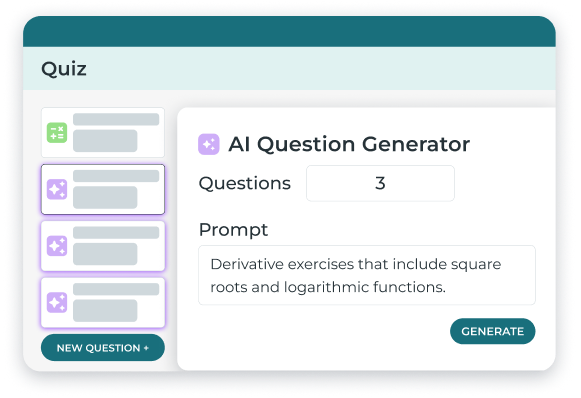
- Teachers can generate tasks tailored to students’ skill levels so learners aren’t overwhelmed by content that’s too advanced or bored by problems that are too easy. The system constantly analyzes their performance and adapts accordingly, ensuring an optimal challenge level.
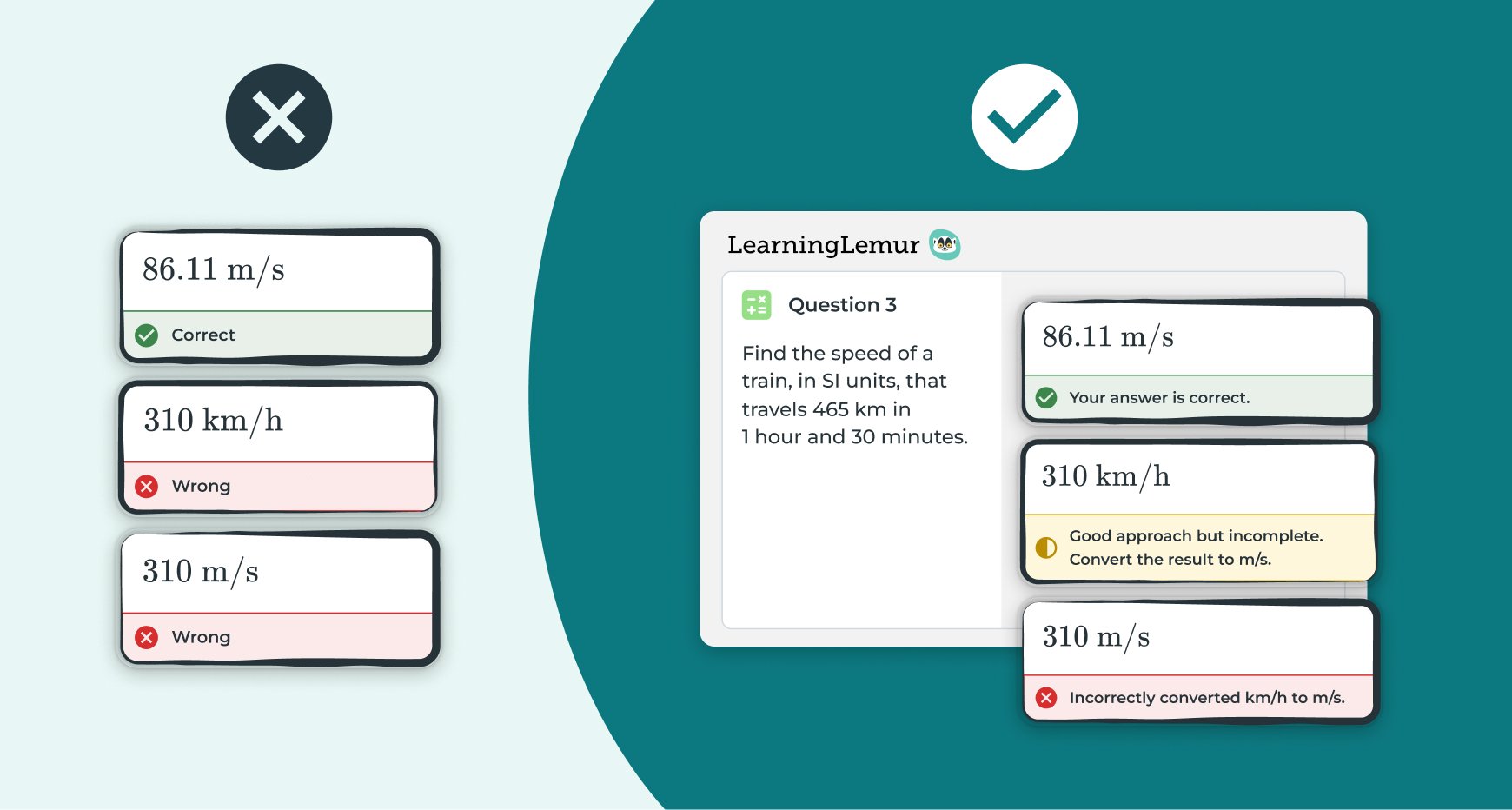
- It offers specific hints and explanations, not just right-or-wrong responses. This helps students understand why something is incorrect and how to fix it, transforming errors into learning opportunities.
- It tracks learning in real time. This enables timely intervention, targeted support, and informed instructional decisions, all without increasing teacher workload.
By integrating all these elements, LearningLemur supports teachers and empowers learners, bringing the vision of personalized math education into everyday reality.
How math assessment improves through personalized feedback
In traditional settings, assessment is often treated as the endpoint, an event to measure performance. But in personalized learning environments, assessment becomes part of the learning process itself. This shift turns feedback into a formative experience that informs, guides, and supports rather than simply evaluates.
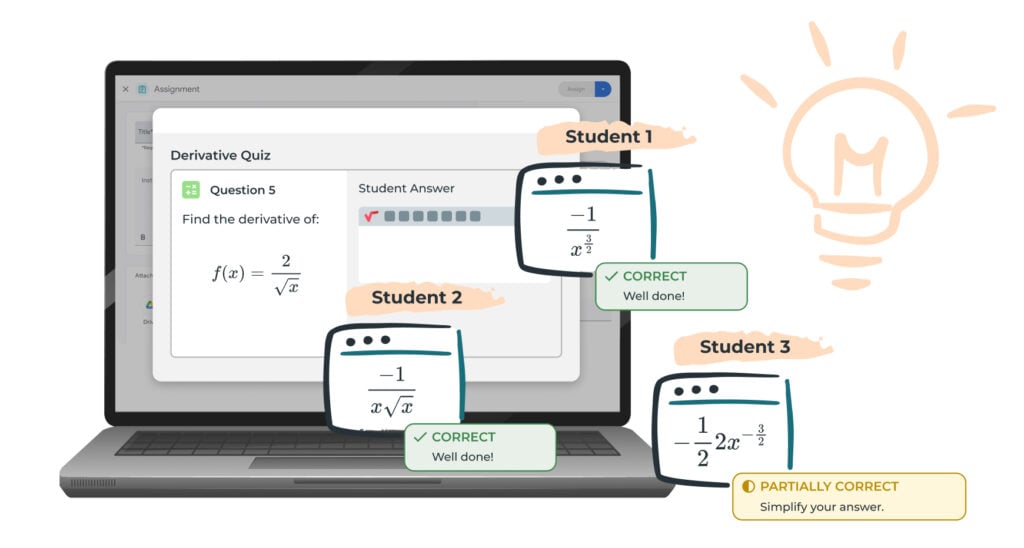
Real-time intervention is one of the most impactful outcomes of this shift. When a student answers incorrectly, they don’t have to wait days for a teacher to mark their test. Instead, they get immediate insights that help them understand and correct their thinking on the spot.
Feedback also moves the focus from grades to growth. Rather than being judged by a final score, students can track their progress over time. This builds confidence, encourages persistence, and promotes a mindset that values progress.
In addition, personalized feedback lowers performance anxiety. When learners know they will receive help tailored to their needs, they feel safer taking risks and exploring new ideas -especially important in math, where fear of failure can be a significant barrier.
Finally, it promotes autonomy. Students begin to recognize patterns in their thinking, anticipate mistakes, and apply strategies they’ve learned through feedback. This turns them into self-aware, independent learners, a goal at the heart of any meaningful math education strategy.
When classrooms get personal: Real scenarios that work
Across educational levels and formats, teachers are using personalized digital tools to transform math assessment in the classroom.
- In remote learning environments, LearningLemur ensures that students aren’t left alone. As they solve problems, the system reacts instantly, providing support and identifying gaps even when the teacher isn’t present.
- In hybrid classrooms, it serves as an extension of the teacher. While instructors lead lessons, LearningLemur personalizes follow-up practice, making sure that each student consolidates learning in their own way.
- In contexts involving special education needs, LearningLemur adapts tasks to suit each learner’s accessibility requirements. Whether a student needs extra time, simpler language, or step-by-step guidance, the platform adjusts seamlessly.

A quick classroom snapshot
A middle school math teacher assigns exercises through LearningLemur. One student, who’s been struggling with decimals, receives scaffolded problems and targeted hints. Another, who has mastered fractions, is given enrichment tasks involving ratios and proportions. Both receive immediate, tailored feedback, and both show measurable improvement within a week, reinforcing the impact of personalized learning on real classroom dynamics.
What we’ve learned about learning
Generic feedback doesn’t cut it anymore. With the tools and technology now available, students and educators alike benefit more from systems that adapt, respond, and guide in real time. Personalized learning increases engagement, fosters mastery, and makes math more approachable. Tools like LearningLemur are essential to turning math assessment into a powerful teaching tool rather than a static measurement.
Share


-
Start with LearningLemur now!
High-quality math practice. Zero grading bottlenecks.