
In this article
- Why confusing correlation and causation leads to bad decisions
- Breaking down correlation and causation in simple terms
- The real impact of misunderstanding correlation and causation
- Why statisticians, mathematicians, and data professionals are more important than ever
- A practical framework to distinguish correlation from causation
- Where correlation and causation matter most in the real world
- How technology supports a better understanding of data relationships
- Turning insight into action with correlation and causation
Why confusing correlation and causation leads to bad decisions
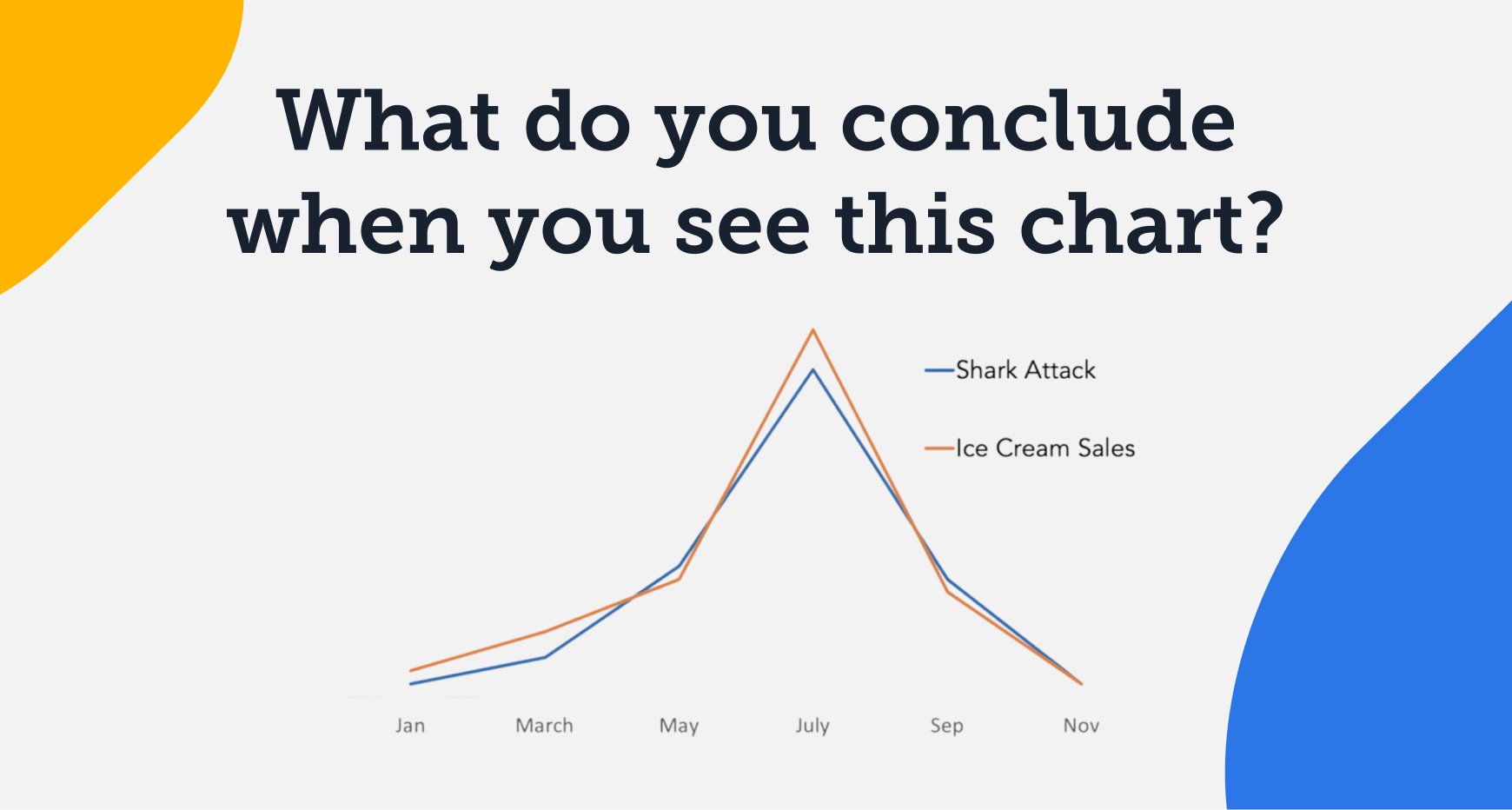
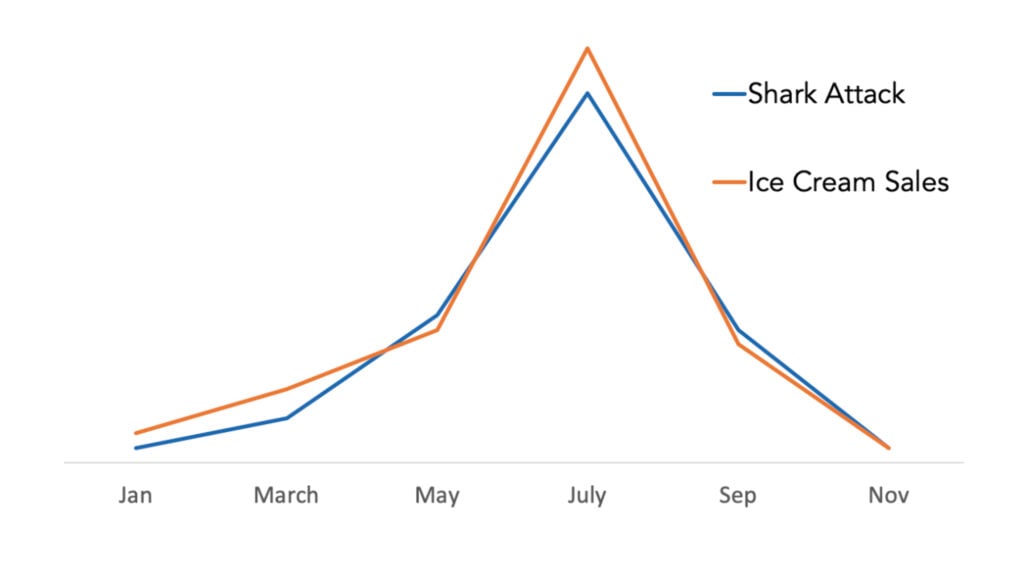
Shark attacks increase when ice cream sales rise. Does that mean ice cream causes shark attacks? It sounds absurd, yet this type of reasoning appears more often than we think.
In a world increasingly driven by data, misunderstanding correlation and causation can lead to decisions that are not just wrong, but costly. From business strategies to educational policies, confusing these two concepts can result in misleading conclusions that feel convincing but lack real evidence.
This article explores the difference between correlation and causation, using real-world examples to show why this distinction matters more than ever.
Breaking down correlation and causation in simple terms
To fully grasp the difference between correlation and causation, we need to define both concepts clearly and understand how they behave in practice.
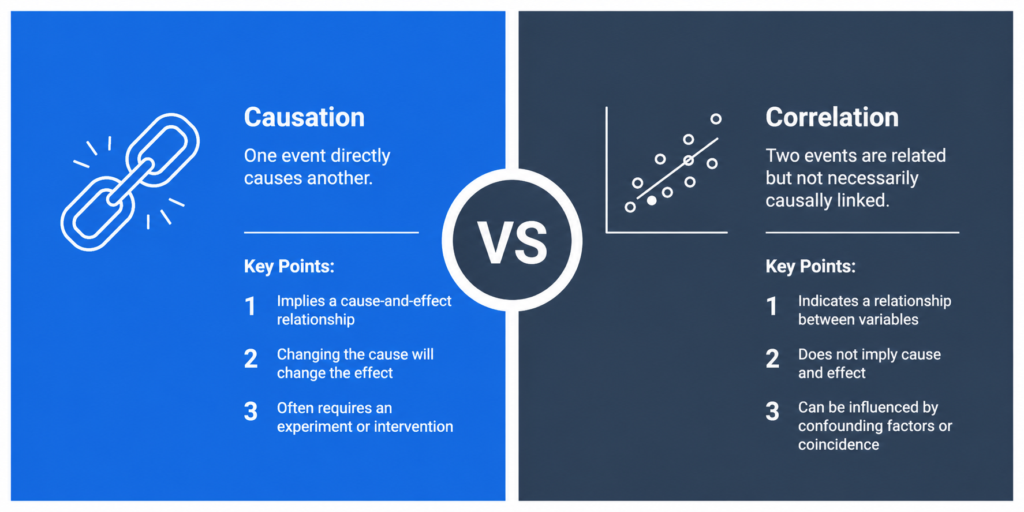
Correlation describes a statistical relationship between two variables. When one variable changes, another tends to change as well. However, this relationship does not imply cause.
Causation, in contrast, means that one variable directly produces a change in another. Establishing causation requires much stronger evidence and careful analysis.
What correlation really tells us
Correlation is useful for identifying patterns and trends. For example, data may show that two variables increase together over time. This can be valuable for prediction, but it does not explain why the relationship exists.
Why causation is harder to prove
Proving causation requires isolating variables and demonstrating a direct link between them. This often involves controlled experiments, statistical validation, and the elimination of alternative explanations. Because of this complexity, causation is far more difficult to establish than correlation.
The real impact of misunderstanding correlation and causation
Failing to understand the difference between correlation and causation can have serious consequences across multiple fields. The same flawed reasoning behind the idea that ice cream sales could “cause” shark attacks appears in more complex and less obvious situations.
What makes this especially dangerous is that incorrect conclusions often look convincing at first glance. When data seems to “tell a story,” it is easy to accept it without questioning what is really driving the relationship.
For example, people who carry umbrellas often notice more car accidents. This shows correlation, but not causation. Rainy conditions make roads more slippery and reduce visibility, which increases the likelihood of accidents and also leads more people to carry umbrellas.
In business, a company might notice that customers who receive promotional emails tend to spend more. Assuming causation, they may increase email campaigns. However, the true explanation may lie in user behavior: highly engaged customers are both more likely to open emails and to spend more.
These examples illustrate how confusing correlation and causation can lead to misguided strategies and wasted resources.
Why statisticians, mathematicians, and data professionals are more important than ever
The rapid expansion of data-driven decision-making has created an unprecedented demand for statisticians, mathematicians, and data professionals. These roles are no longer limited to academic environments but are now central to industries such as healthcare, finance, education, and technology.
At the core of their work lies the ability to correctly interpret correlation and causation. While many organizations can identify patterns in data, far fewer can confidently determine whether those patterns reflect true causal relationships.
The role of statisticians in uncovering causation
Statisticians play a critical role in designing experiments and validating results. Their work focuses on moving beyond simple correlation by applying rigorous methodologies that help identify true causation.
They are responsible for structuring studies, controlling variables, and ensuring that conclusions are statistically sound. Without their expertise, it becomes difficult to distinguish between coincidence and meaningful relationships in data.
How mathematicians build the foundations of data analysis
Mathematicians contribute by developing the theoretical frameworks and models that make advanced data analysis possible. Their work underpins algorithms, statistical techniques, and predictive systems used across industries.
These mathematical foundations are essential for understanding how relationships between variables are modeled, tested, and interpreted, particularly when dealing with complex systems where correlation and causation are not immediately clear.
Data professionals turning insights into action
Data professionals, including data analysts and data scientists, bring these insights into real-world contexts. They work directly with datasets, identifying patterns and translating complex findings into actionable insights for decision-makers.
Their role is especially critical in bridging the gap between theory and practice. By questioning assumptions and carefully interpreting results, they help organizations avoid confusing correlation with causation in high-stakes decisions.
In practice, these professionals are responsible for:
- Interpreting complex datasets and identifying meaningful relationships
- Distinguishing between correlation and causation
- Supporting data-driven strategies with reliable evidence
As the volume of data continues to grow, so does the need for professionals who can interpret it correctly. This trend is driving the expansion of careers in statistics, mathematics, and data science, making these skills increasingly valuable in today’s workforce.
Common mistakes to avoid
When working with data, professionals often fall into recurring errors when interpreting correlation and causation.
- Assuming that correlation automatically implies causation: For example, studies may show that students who spend more time on social media tend to achieve lower academic results. While this suggests a correlation, it does not prove causation. Social media use may not be the direct cause of lower performance. Instead, underlying factors such as poor time management, lack of study habits, or external distractions could be influencing both variables.
- Ignoring hidden or confounding variables: A correlation between coffee consumption and productivity might appear strong, but workload intensity could be the real factor influencing both variables.
- Misinterpreting the direction of the relationship: A business might assume that customer satisfaction drives product usage, when in reality, frequent usage may increase satisfaction.
Recognizing these pitfalls is essential for avoiding misleading conclusions.
A practical framework to distinguish correlation from causation
Distinguishing between correlation and causation requires more than intuition. After all, the same instinct that might lead someone to link ice cream sales with shark attacks can also lead to flawed conclusions in business, education, or research if not supported by structured analysis.
A useful way to approach this is by asking a series of key questions when analyzing any relationship between variables:
- Is the relationship consistent across different datasets or over time? A one-time correlation may be coincidental.
- Could there be a third variable influencing both factors? Identifying confounding variables is essential to avoid misleading conclusions.
- Is there evidence from controlled experiments or longitudinal studies? Observational data alone are rarely enough to establish causation.
- Does a logical and scientifically plausible mechanism exist? Without a clear explanation, even strong correlations should be treated with caution.
For example, if a company observes that customers who use a mobile app spend more, these questions help determine whether the app drives spending or if more engaged customers simply use the app more frequently.
Applying this framework allows professionals to move from surface-level observations to more reliable conclusions about causation.
Where correlation and causation matter most in the real world
Understanding the difference between correlation and causation is not just an academic exercise. It plays a central role in how decisions are made across industries, especially in a context where data is abundant but not always correctly interpreted.
As organizations increasingly rely on analytics, the ability to distinguish between correlation and causation becomes a critical skill. Decisions based on incorrect assumptions can result in financial losses, ineffective strategies, or flawed policies.
| Field | Example | Insight |
|---|---|---|
| Healthcare | Observational data may suggest that patients taking a supplement recover faster. | However, this does not prove causation, as other factors such as lifestyle or access to care may influence results. |
| Business | A company may find that users engaging with a specific feature are more likely to convert. | It may be that highly engaged users naturally explore more features, meaning the feature itself is not the cause. |
| Education | Students who spend more time on digital platforms may perform better. | This does not necessarily mean that usage causes improvement, as motivation may be the underlying factor. |
How technology supports a better understanding of data relationships
As the demand for statisticians, mathematicians, and data professionals grows, so does the importance of tools that support their work. Understanding correlation and causation requires not only theoretical knowledge but also the ability to clearly express and communicate complex relationships.
In both education and professional environments, technology helps bridge the gap between abstract concepts and real-world application. Clear mathematical communication is essential when working with correlation, building models, or explaining findings.
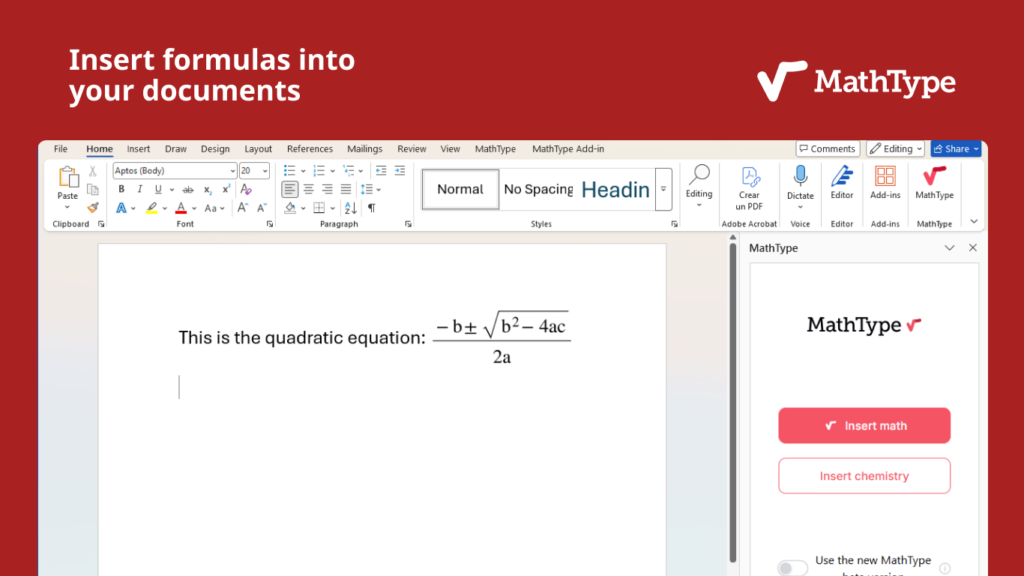
Tools like MathType, Wiris’ powerful equation editor, designed to create and edit mathematical notation in digital environments, enable users to write and share statistical expressions with precision. This clarity is especially important when dealing with concepts such as correlation and causation, where misunderstandings can lead to incorrect conclusions.
Building stronger data literacy skills
To correctly interpret correlation and causation, learners and professionals need to develop essential competencies.
- Reading and interpreting data visualizations
- Understanding statistical reasoning
- Communicating findings with precision
Technology plays a key role in making these skills accessible, helping users move from identifying correlation to critically evaluating causation.
Turning insight into action with correlation and causation
Understanding correlation and causation is a fundamental skill in modern STEM education and professional practice. While correlation helps identify patterns, only causation provides the foundation for meaningful conclusions.
As data continues to shape decision-making across industries, the ability to understand the difference between correlation and causation will remain essential. By combining strong analytical thinking with the right tools, professionals can ensure that their insights are both accurate and impactful.
Share


Discover why thousands trust MathType
Enjoy 30 days of free access to MathType for Office Tools.