A Need for Smart Math Publishing
Österreichischer Bundesverlag Schulbuch GmbH & Co. KG (öbv) is one of Austria’s leading educational publishers, producing both printed and digital content for students from preschool to the end of high school. Their goal is to equip teachers with tools that make teaching more efficient, adaptable and aligned with everyday classroom needs.
To understand how technology supports this mission in math, we spoke with Daniela Auer-Seitz and Raphael Hamann, from the digital product development team. With roles connected to editorial strategy and digital workflows, they oversee how content moves from authoring to publication, both in print and online. An integral part of that process is MathType, the Wiris’ visual digital math formula editor that enables formula creation without requiring LaTeX.
As Daniela notes,
“It’s intuitive to create math formulas, even complex ones, in an easy way,” underscoring why usability is crucial in their daily workflow.
How MathType in Education Platforms Transformed the Content Creation Workflow
Before introducing MathType in education platforms, creating math formulas required technical expertise and slowed down collaboration between departments. Producing exercises and assessments often meant writing LaTeX code or using default formula editors— something not all contributors were trained to do. These limitations made formula editing inefficient and created barriers within their math content creation workflows.
As Daniela Auer-Seitz affirms, “Without MathType it would be tremendously difficult sometimes to create and publish our content because we have such complex formulas that require precision.”
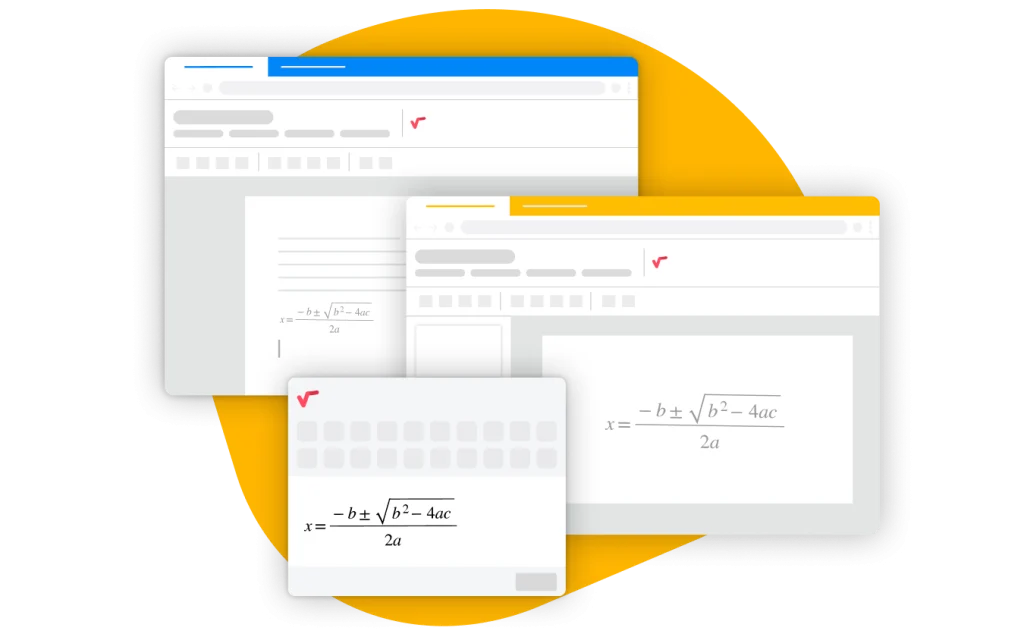
Today, MathType is integrated into their main tools:
- SiteFusion + Fonto (FMS): their editorial and digital content hub
This is where editors and authors create and manage math formulas for textbooks and digital materials. MathType is embedded directly into their CMS, ensuring consistency across their outputs. They also rely on MathType within Cloudbi to produce digital assessments, but this is not a separate use case. The team confirms the use is similar to the CMS scenario and simply extends their editorial workflow into digital interactive exercises and activities.
- Their proprietary exam generator: designed for teachers
Their in-house exam generator allows teachers to quickly create classroom-ready tests. MathType is used both in the backend (for building original items) and in the frontend (so teachers can adapt formulas themselves).
As Raphael explains, “Our users don’t need LaTeX knowledge. They just focus on creating math content, not formatting it.” Thanks to this integration, the team regards MathType as more than a tool: they see it as a digital math formula editor for publishers that bridges technology and pedagogy.
This dual-use approach led Daniela to conclude:
“For us, it’s the best tool on the market for math formulas.”
A Formula for Efficiency in Math Content Creation
MathType didn’t just solve a workflow issue: it reshaped how content is designed. It positioned math content creation as a collaborative and scalable process, rather than a technical hurdle. Editors, authors and teachers can now build and adapt formulas directly, ensuring consistency across printed and digital outputs.
Daniela summarises the impact clearly: “We needed a better tool… and we found MathType. We haven’t found a better one.”
Key improvements they identified include:
- Eliminating the dependency on LaTeX or MathML allows a wider range of contributors to create math content confidently and efficiently.
- Streamlining collaboration between editorial teams and classroom educators, since everyone works within the same user-friendly interface.
- Accelerating production by offering consistent formatting across platforms is vital for both printed textbooks and digital material.
- Making content adaptable to curriculum changes, updates or regional requirements, without having to rebuild formulas from the ground up.
A Collaborative Roadmap: The Future of Math Creation
One of the most valuable aspects of this initiative is the ongoing collaboration between öbv and Wiris. Their continuous feedback directly informs product improvements, showing that MathType in education platforms is shaped by real classroom experience rather than theory.
Turning Workflow into Impact
Öbv experience shows that improving math content creation is not only about simplifying tasks: it’s about empowering the teams who create and adapt that content every day. With MathType integrated into both their editorial system and their exam generator, editors and teachers can now work more independently, without relying on LaTeX or external specialists.
This shift has accelerated collaboration: editors produce formulas more quickly, and teachers can adjust exercises directly to fit their students’ needs. At the same time, MathType ensures that formulas remain visually aligned across print, digital materials, and classroom assessments, reinforcing the high standards expected from a leading educational publisher.
The time saved on formatting and manual correction allows öbv to focus on developing richer learning materials and responding more effectively to curriculum changes.
MathType now stands as a key element in öbv digital ecosystem, supporting smoother collaboration, faster production cycles, and more flexible math content across every platform they serve.
Share


-
Discover why thousands trust MathType
Enjoy 30 days of free access to MathType for Office Tools.